What makes a good pizza:
the dough, the oven, time
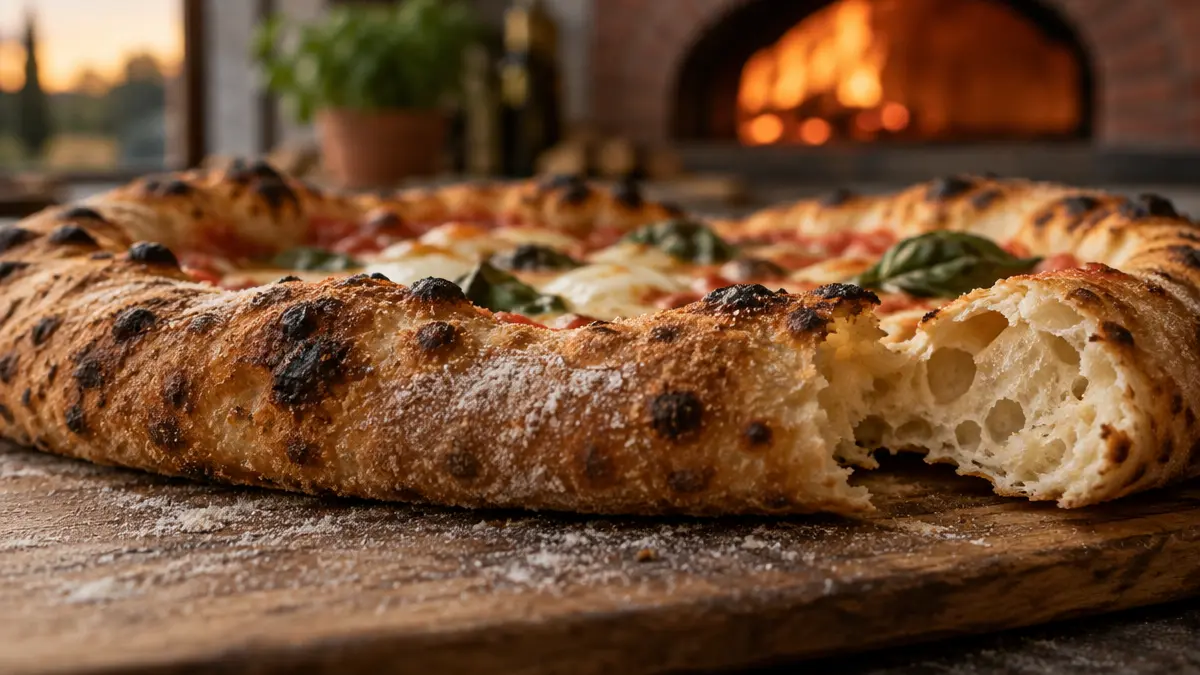
Some pizzas even have written rules, in a European specification: a few hours of rising at room temperature and 60-90 seconds in the oven. We do it differently: our dough matures for 48 hours in the cold.
Why we don't copy someone else's recipe
Those rules are good for what they were written for: one particular pizza, from one particular place, made one particular way and checked against exactly that. Andrei opened Pizzeria del Corso in 2016, after years spent in kitchens across Italy, and he didn't bring a recipe to Sibiu to copy. He brought the idea that a good pizza rests on three things that have nothing to do with trends: the dough, the oven and time. That's what we've built everything we bake in Piața Mare on, and in the end, each of them shows on your plate.
The dough: it all starts two days ahead
During those two days in the cold, the yeast works slowly, the flavor deepens and the gluten relaxes, so the dough ball stretches by hand, no rolling pin. The result is a fluffy, airy base. We've told the process step by step, in full, in our article on long maturation. Here we'll stick to what you can see: the edge puffs up in the oven, and when you tear off a piece, there are big, uneven air pockets inside, not a tight crumb like sandwich bread.
The wood oven and those two minutes
A wood oven gets to over 400 degrees Celsius, and its stone floor holds the heat for hours. At that temperature, a pizza bakes in under two minutes. The edge picks up browned spots, almost charred in places, while the base stays soft inside. A regular electric oven bakes slower and at a lower temperature, so the base has time to dry out before the edge browns.
A bake that short takes attention. The pizzaiolo never leaves the mouth of the oven: he turns the pizza with the peel so it bakes evenly, because the side facing the fire browns faster. We keep feeding the fire with wood all evening, so the oven floor doesn't cool down when the dinner orders come in. That's why every pizza is baked to order, never ahead of time.
Few ingredients, but well chosen
When the base is good, you don't need to hide it under ten ingredients piled on top: a few very good ones are enough. On the Margherita we use tomato sauce, fior di latte mozzarella and basil. All the pizzas on our menu follow the same rule: the Diavola has spicy salami and a pinch of chili, the Quattro Formaggi brings four cheeses together, and the Capricciosa combines ham, mushrooms, artichokes, olives and egg, each in its own place. All our pizzas contain gluten and milk, the Capricciosa also contains egg, and those with salami or ham also contain soy (the Diavola, mustard too); you'll find the allergens marked next to every dish.
The time from oven to table
The third thing is partly up to you. A soft-crust pizza is at its best in the first few minutes after it comes out of the oven: the edge is crisp on the outside, the mozzarella is still melted and the center hasn't gone soggy from the sauce. If it sits on the table or in a box for a quarter of an hour, the base tightens and the edge hardens. That's why we don't run our own delivery, and our servers take each pizza to the table as soon as the pizzaiolo pulls it off the oven floor.
A small tip: start with the middle while it's hot, and save the edge for last. And if you're coming with a big group and want all the pizzas to arrive at once, give us a call ahead of time, so we can get the table and the oven ready for you.